Spatial Audio Pedagogies: Designing Across Studio, Culture, and Space by Rodrigo Meirelles & Daniel Ocanto

➡️ This presentation is part of IRCAM Forum Workshops Paris / Enghien-les-Bains March 2026
Spatial audio is often approached as a technical specialization. This presentation instead proposes it as a pedagogical framework: a way of thinking, listening, and designing across studio practices, cultural narratives, and physical space.
Developed over a 1.5-year period at Arizona State University’s Media and Immersive eXperience (MIX) Center, this project brings together faculty research and student work created for the Enhanced Immersion Studio (EIS), a large-scale 55-speaker Meyer Sound Spacemap Go NADIA environment designed for immersive media, performance, and experimentation. The session shares how spatial audio is taught not as a fixed workflow, but as a transferable design literacy that adapts to different formats, technologies, and creative contexts.
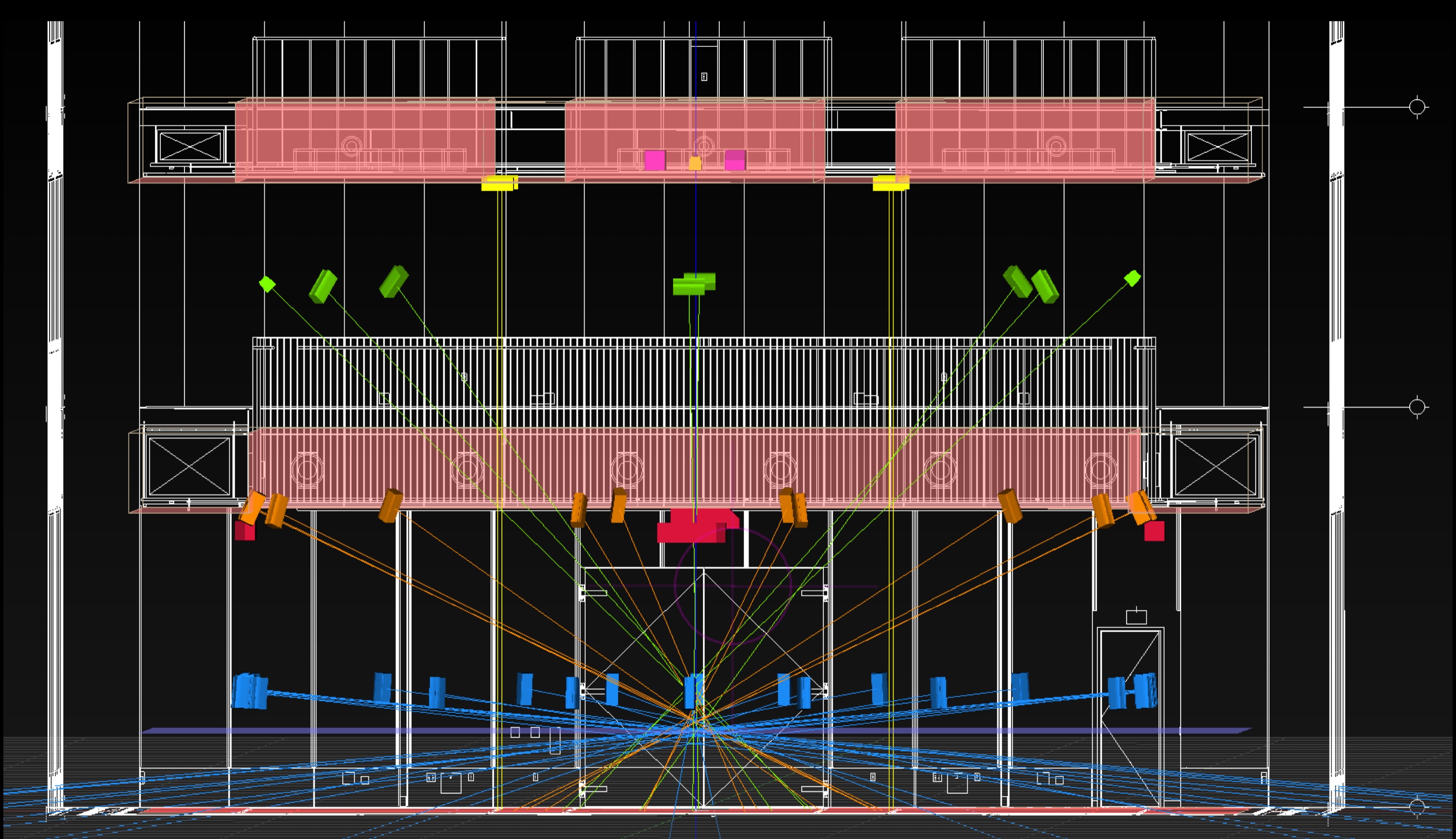
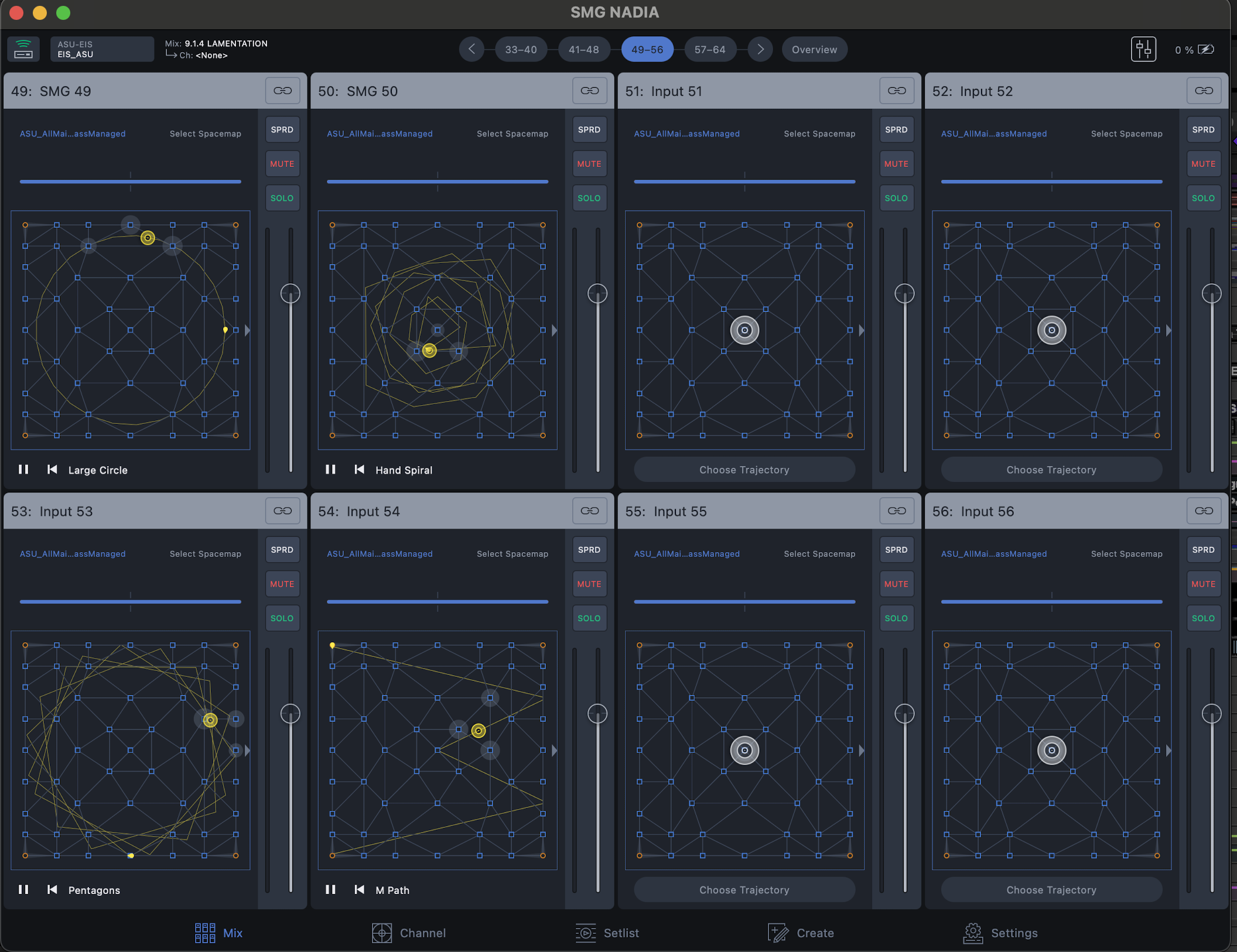
The presentation features excerpts from faculty-led works and student projects spanning sound installations, live performance, and cross-disciplinary collaborations involving voice, video, text, and show control systems. Rather than emphasizing technical polish, these case studies foreground process: how students from diverse backgrounds learn to think spatially through collaborative, hands-on experimentation.
Inspired by critical and experiential pedagogical models, this approach treats students as active authors of meaning rather than passive users of tools. Spatial decisions become narrative, cultural, and perceptual choices: how sound moves, where it resides, and how it relates to memory, environment, and storytelling.
The session combines focused listening, system walkthroughs, live spatial manipulation, and short student testimonies reflecting on their creative process. By comparing different spatial contexts—large-scale installations, studio playback, and binaural renderings—the presentation highlights how spatial thinking persists across technical constraints.
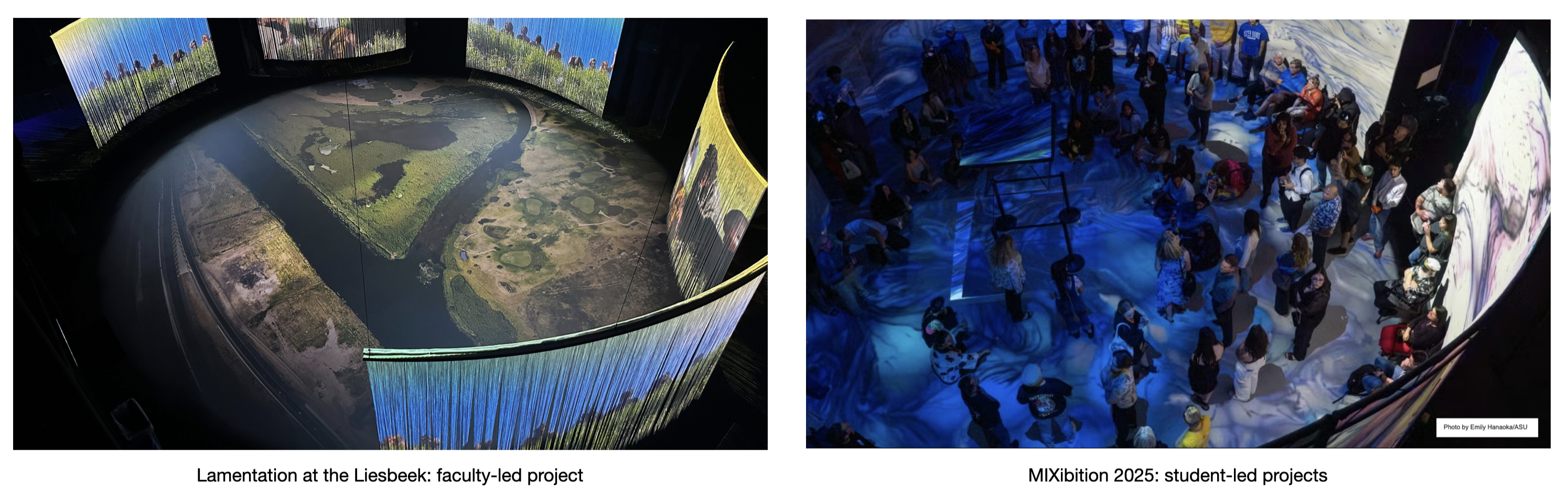
Ultimately, this demo argues for spatial audio as a shared language across disciplines, one that supports creative autonomy, collective authorship, and new forms of immersive storytelling beyond the laboratory or the classroom.