Tape Loop Workshop by Stegonaute

➡️ This presentation is part of IRCAM Forum Workshops Paris / Enghien-les-Bains March 2026
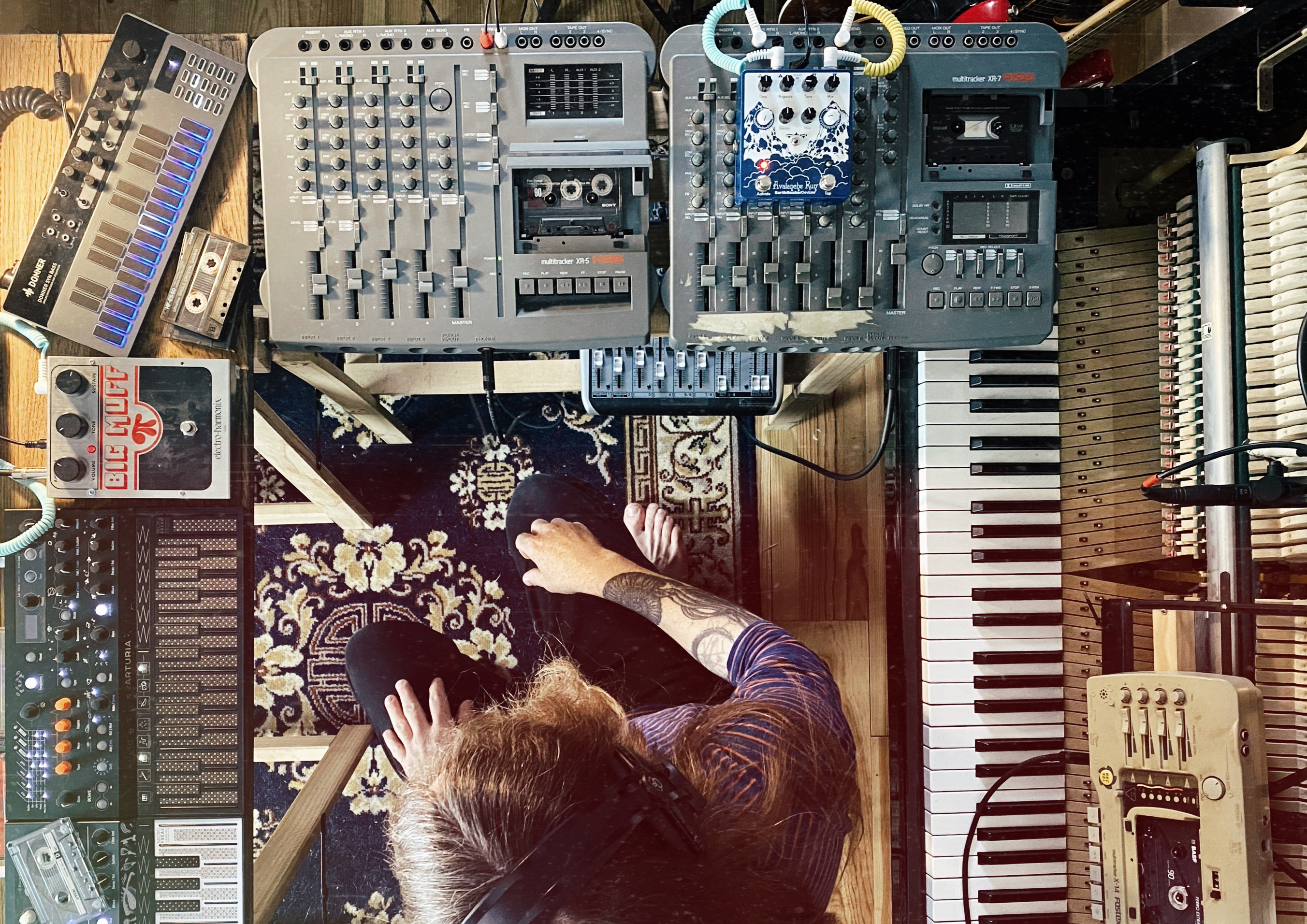
Tape Loops as a Physical and Musical Practice
In this workshop, I focus on tape loop techniques using compact audio cassettes as both sound carriers and musical objects. Starting from commercial mass-produced tapes I deliberately embrace re-use, transformation, and deviation from the cassette’s original function. The cassette is no longer a storage medium, but becomes an instrument somewhere between a very simple Mellotron and a random sequencer.
By dismantling, cutting, and reassembling cassette tapes, participants create continuous tape loops. These loops introduce repetition, phase shifts, instability, and erosion as central musical parameters.
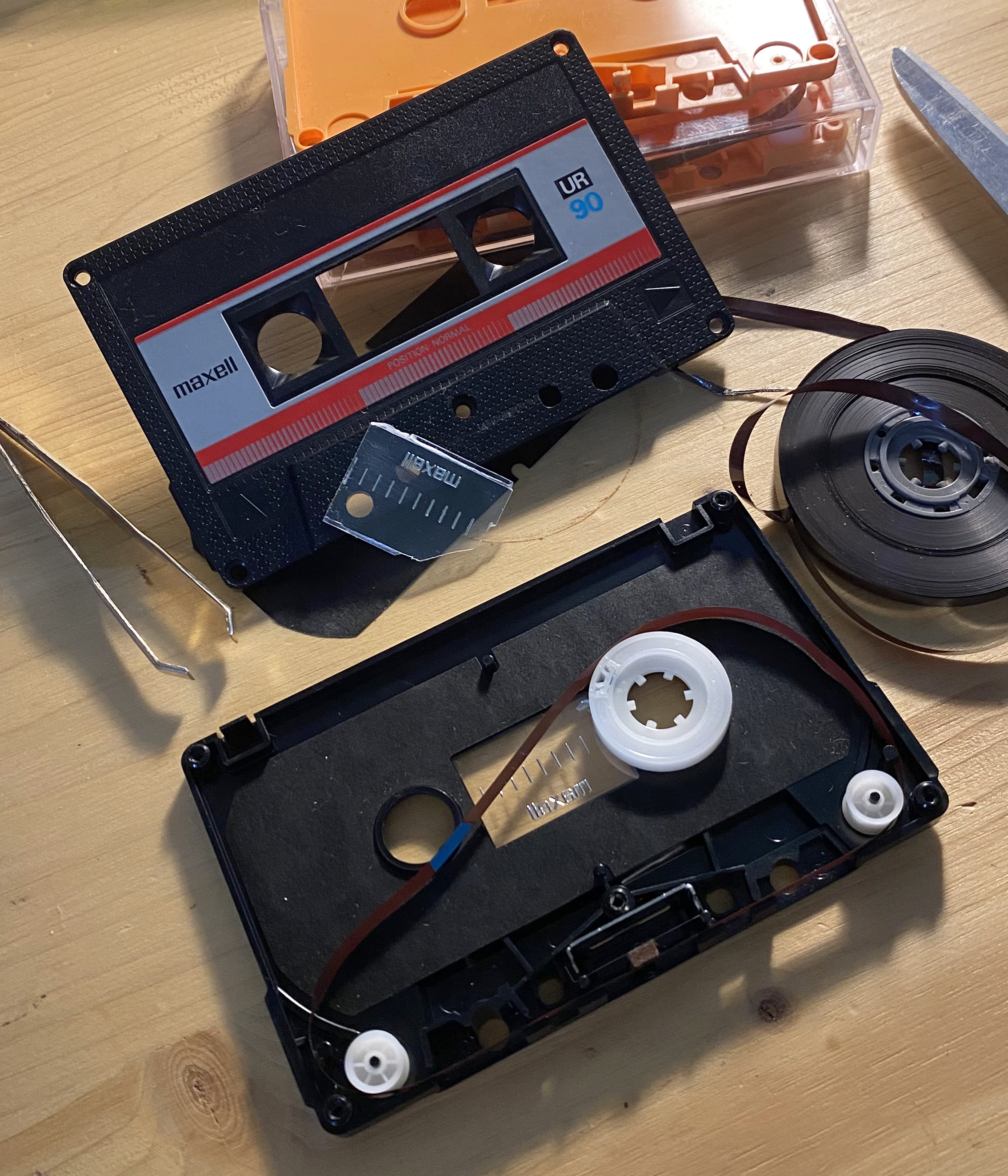
Analog Constraints as Creative Forces
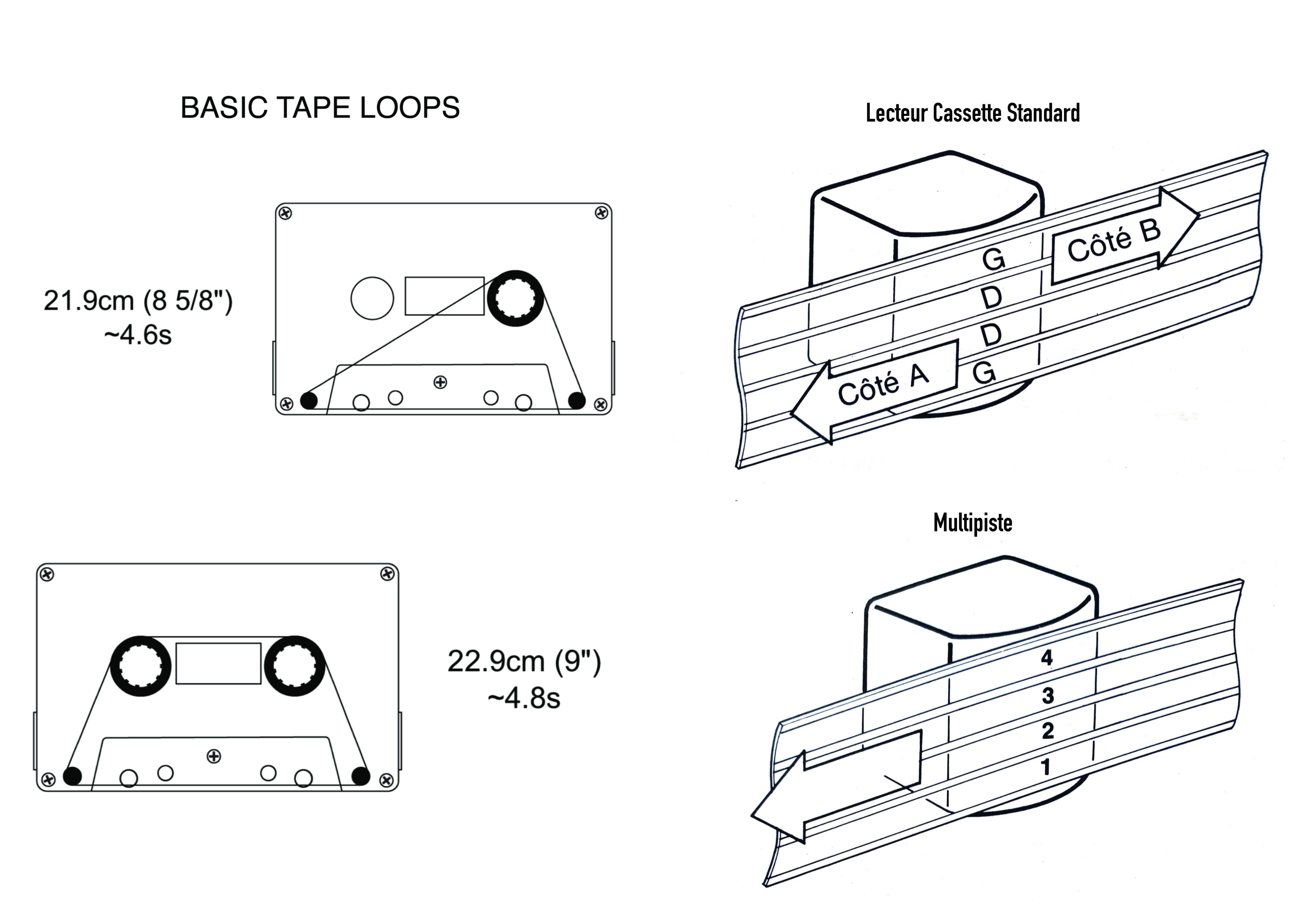
Using vintage 4-track cassette recorders (Tascam and Fostex), I explore how mechanical limitations such as wow and flutter, NOISE, dropouts, and saturation can be transformed into expressive qualities. These machines read cassette tapes in a single direction only, which allows recorded tape loops to be physically flipped and played backwards without any digital processing. This simple mechanical inversion opens up rich sonic possibilities, revealing reversed envelopes, altered attacks, and unfamiliar temporal structures that fundamentally reshape the perception of sound and gesture.
In addition, I introduce a common "analog" modification consisting in placing a small piece of aluminum foil over the erase head. This effectively disables the erasure process, allowing continuous overdubbing on the tape, to create the famous "sound on sound" effect.
The absence of digital synchronization and precise control opens a space where timing drifts, textures evolve unpredictably, and sound remains in constant motion.
Rather than correcting imperfections, I invite participants to listen to them carefully and to compose with them.
Tape Loops, Memory, and Ecology
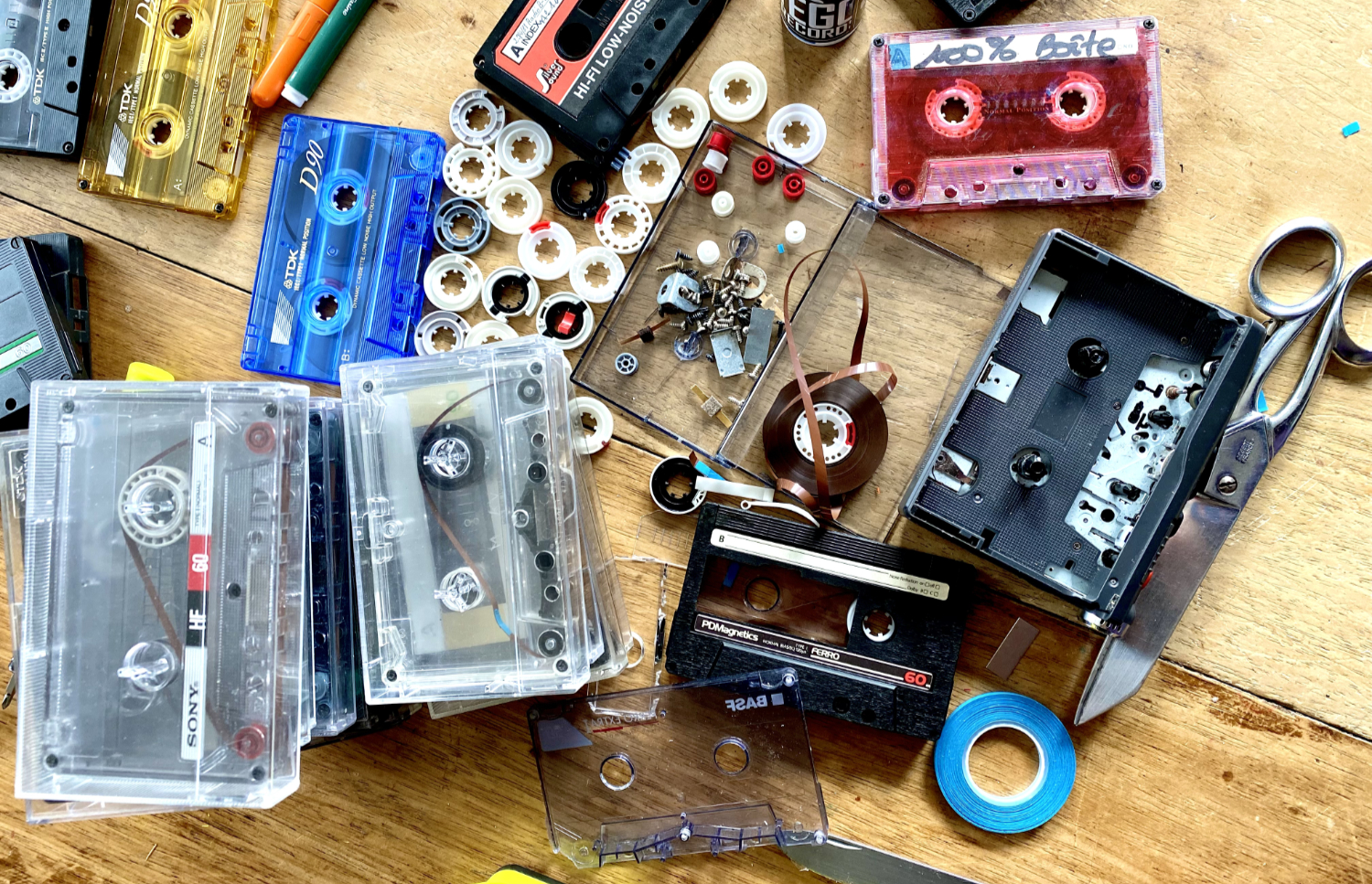
Working with obsolete or discarded media also raises ecological and symbolic questions. By re-using old cassettes and tape machines, I challenge linear narratives of technological progress and propose a more circular approach to sound production. Tape loops embody memory in motion: sometimes I keep the printed material on the tape and these recorded fragments are endlessly replayed, gradually transformed by time, friction, and material wear.
This approach situates sound creation within a material, ecological, historical and sometimes personal perspective, where listening becomes an act of care toward fragile media.
Collective Exploration and Listening
The workshop alternates between hands-on construction, collective listening, and improvisation sessions. Participants share their loops, experiment with layering and live manipulation, and reflect on how repetition, decay, and duration shape musical form. I love discover how participants bring new perspectives to me at each workshop.
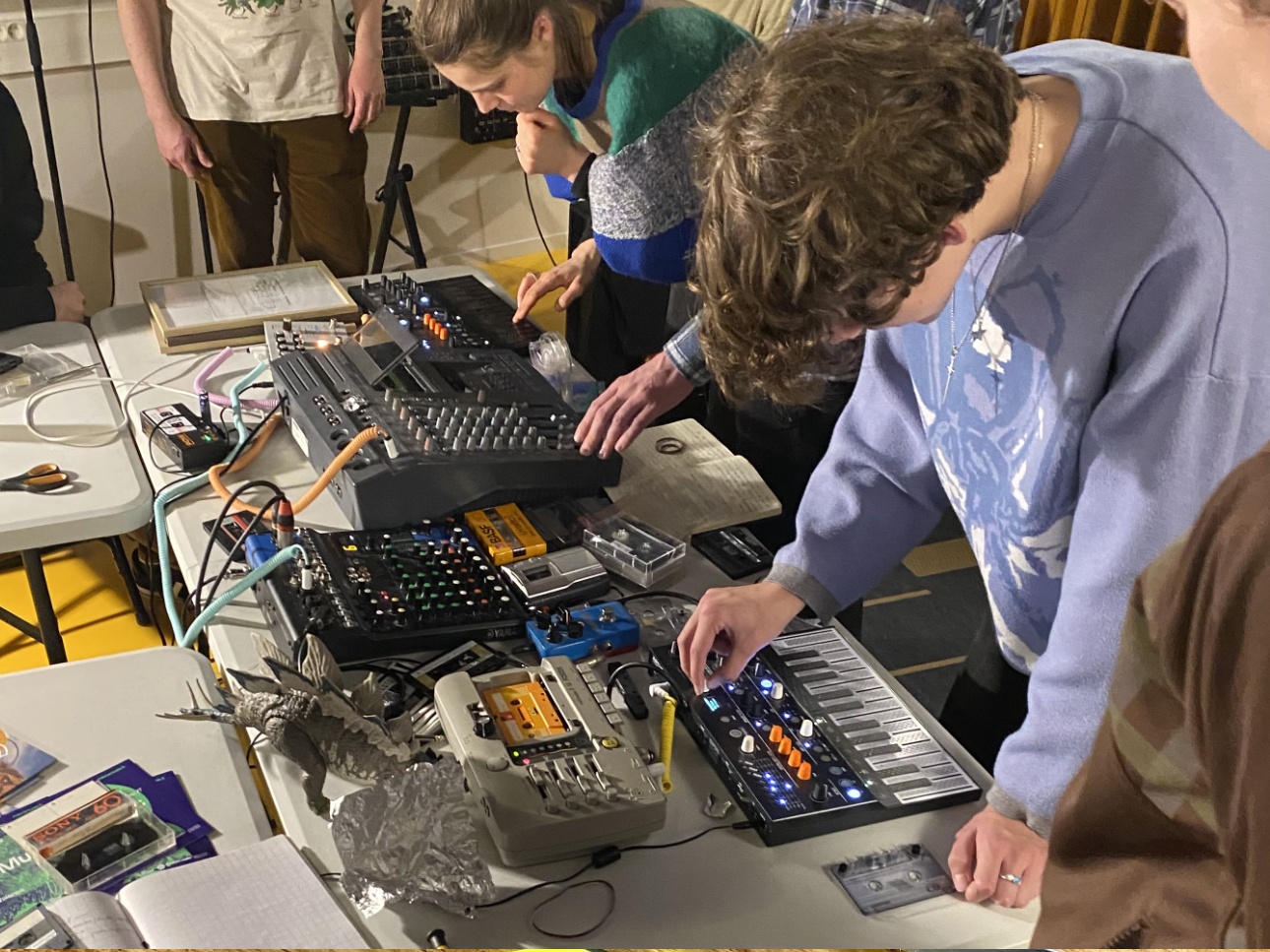
The goal is not technical mastery, but the development of a sensitive relationship to sound, time, and materiality where composition emerges from touch, listening, attentive presence and often from randomness.